


“…the border as an invitation as opposed to a boundary, the correlation between walls and bridges, the cultural connections, the diversity of the underlying epistemic scenarios…In a reality where the tendency to build walls seems more enduring than the will to create
bridges, the question arises as to how optimal a cultural diversity can coexist in a common space. An elementary answer can be drawn around the notions of esteem, empathy and resilience”. Romanian artist Oana Ionel, one of the future participants of our residence Transcarpathia: inside & outside (Uzhhorod, 6-27 september).
Oana’s text could be a kind of annotation to all our work, “borders as an invitation” — could be our motto.
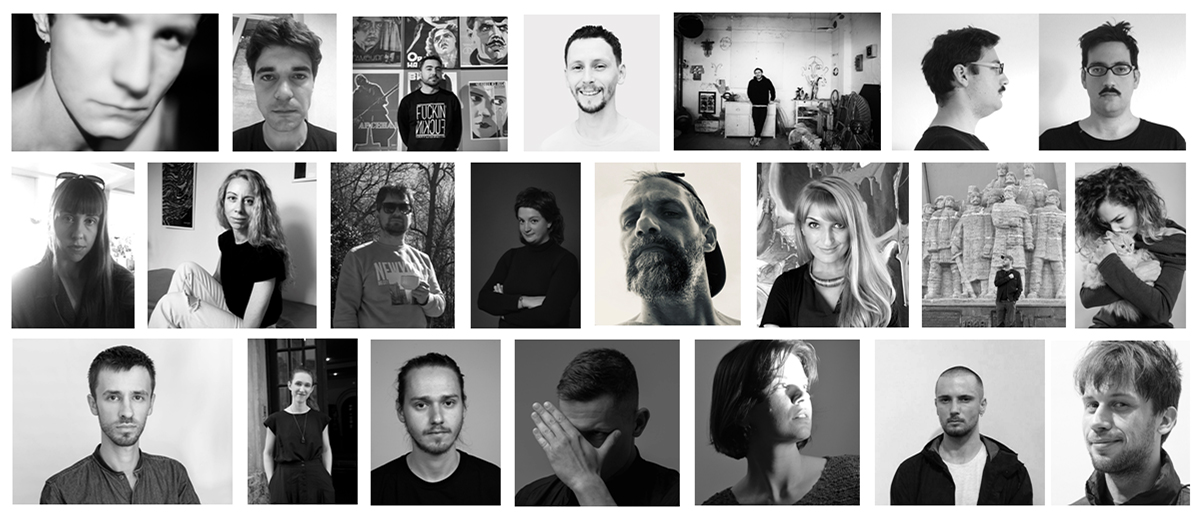
So, with a strong will to build bridges to make transparent borders rather than inviolable boundaries, we are glad to present to you the participants of our september residence.
Our partners in 6 countries (including Ukraine) nominated 27 artists, and the curator of the residence Kateryna Radchenko and Dofa fund’s co-founder Olha Sahaidak jointly selected 20 who demonstrated the greatest interest in learning of some new tools, exploring the region and establishing various interactions.
They are (names of organizations in parentheses — partner institutions that nominated participants):
Livia Mateiaș (Jurca), Marius Jurca, Oana Ione (Romania; Kunsthaus 7B);
Gábor Szűcs, Tomáš Rybár (Slovakia; Nová synagóga Žilina);
Jakub Wróblewski, Jasmina Wojcik, Aleksandra Sarna (Poland; Adam Mickiewicz Institute);
Juliana Höschlová, David Přílučík (Czech Republic; Dům umění města Brna);
Rita Vándor (Hungary; Pro Progressione); Bazil Duliskovich, Gergely Bényi (Hungary, Cublo Art Centre),
Nataliya Tarnay, Dmytro Hreshko,Viktor Melnichuk, Robert Petrychka (Ukraine, Uzhhorod; Cublo Art Centre);
Vasya Dmytryk (Odesa Fine Arts Museum); Emil Asadov (The Museum of Odesa Modern Art); Maksym Finogeyev, Dmitry Yevsieiev (Odesa Photo Days)
Analyzing the applications, we can note that the research interest of our applicants was: most, 18 people, indicated their interest in cultural heritage, 16 — environmental protection and the role of the artist in social and political change, 15 — urbanism, 10 — neighborhood (neighborhood ), 9 — social policy and its cultural impact on the multicultural and multiethnic nature of the Carpathian region.
Most applicants have experience with installations and mixed media, almost half — with photos and videos, about a third — with painting or graphics, 6 — with sculpture, and one in every field — with sound installations, video mapping, social interaction, video games, performative arts, music, etc.
The majority of applicants (21) indicated that they aspired to study augmented reality, 16 — virtual reality, and 14 — 3d mapping.
Finally, between other reasons to participate applicants noted, they are interested in studying new territories and to have the possibility of expanding the specifics of actions (political, ethnographic, social), and, of course, they are looking for the possibility to meet an international community of artists working in similar fields.
So, looking forward with great expectation!
“Transcarpathia: inside and outside” art-residency is implemented in partnership with the House of Europe and with the support of the Ukrainian Cultural Foundation